

An identity card is the most basic, yet most heavily regulated document in daily life. Alongside a passport, it is the only document treated by the state as primary proof of identity — who you are, where you were born, where you live, and since when you legally exist in the records. This guide shows who must have it, what it must contain, and what obligations it carries.
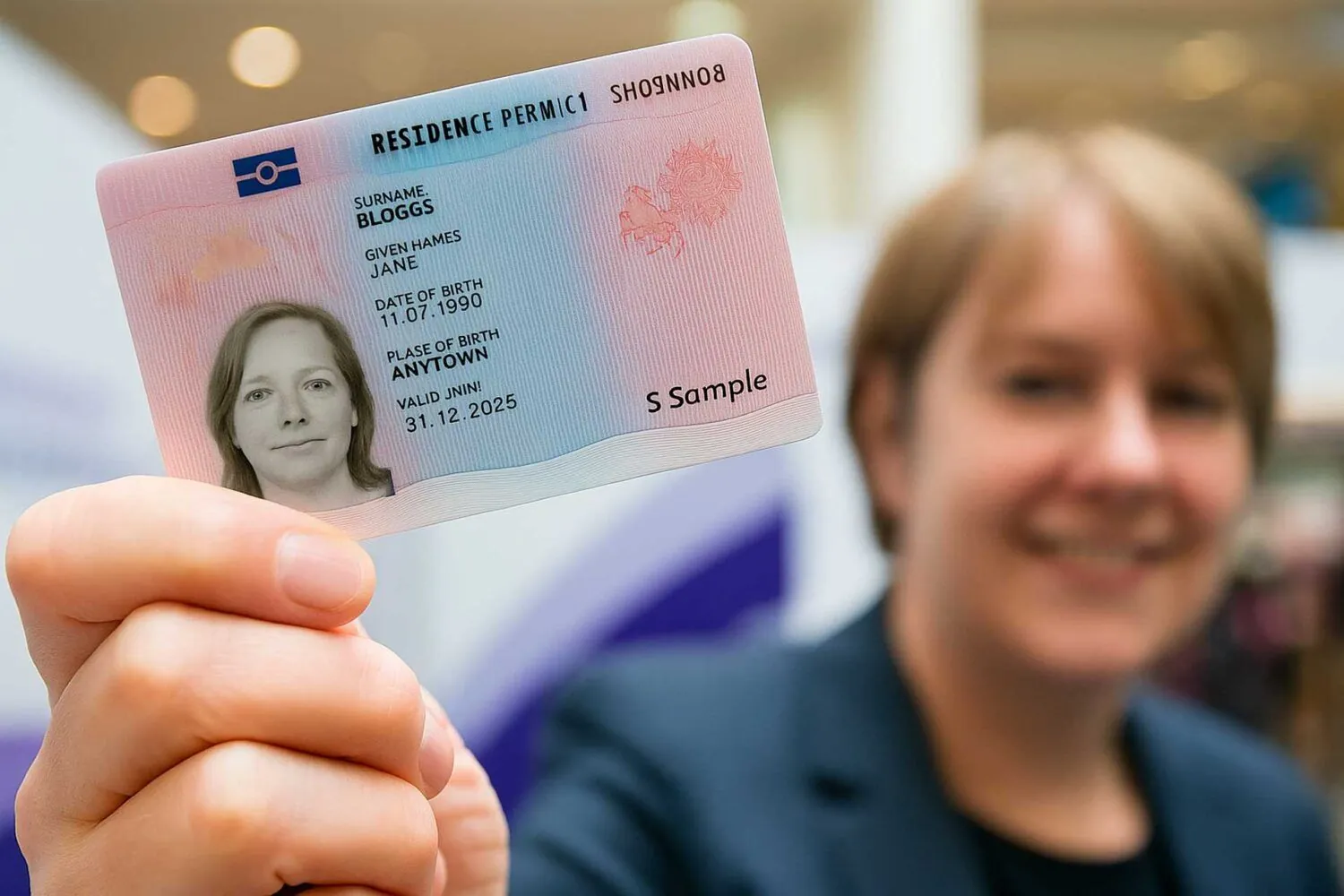
At What Age Does It Become Mandatory
The age limit for mandatory possession of an ID card varies between countries, but in most, it ranges between 14 and 18 years. In some countries, an identity card is mandatory for all citizens regardless of gender or occupation, while in others it is voluntary — but in practice, it is required there for virtually every administrative step. Children can usually obtain an ID card even before reaching adulthood, at the request of a parent or guardian. This "minor" version usually has a shorter validity period — five years instead of ten — because a photograph quickly becomes outdated at an age when appearance changes from year to year.
What an Identity Card Must Contain
Although the design varies from country to country, the content is almost everywhere the same and based on international standards. An identity card legally must contain a minimum set of data that allows the unambiguous identification of a person.
- First and last name, in the official form from the vital records
- Date, place, and country of birth
- Nationality and gender
- A unique identification number or document serial number
- A photograph and often a signature
- Date of issue and date of expiration
- The authority that issued the document
- In newer cards — a biometric chip with a digital fingerprint, photograph, and electronic signature
Obligation of Carrying and Identification
Many countries have a legal obligation to carry an ID card in public spaces for adult citizens. In others, there is only an obligation to provide identification when requested by the police — a passport, driving license, or another photo document usually suffices instead of an ID card.
- Police control has the right to request identification — the obligation is to show the document, but not to hand it over without a legal basis
- For the purchase of certain goods (alcohol, tobacco, over-the-counter medicines in some countries), an ID card is requested as proof of age
- For services related to signing contracts, opening accounts, inheritance — an ID card or passport is mandatory
- Digital identity via a mobile application is replacing the physical carrying of the card in a growing number of countries for certain situations
Refusing to identify yourself when requested by a police officer in accordance with the law is, in most countries, an offense in itself — regardless of whether you have done anything else. The penalty is usually a fine, and in some cases, temporary detention to establish identity.
What to Do When Data Changes
An identity card follows your legal data. When any of it changes — address, surname after marriage, nationality, or even surname after divorce — you are required to apply for a new ID card within the legal deadline. This deadline is often 15 to 60 days, and exceeding it is treated as an offense.
- Change of residence — a new ID card or a replacement address sticker, depending on the country
- Change of surname due to marriage, divorce, or an official change — a new card is mandatory
- Change of gender or name through an official procedure — a new card with new data
- Acquisition or loss of nationality — a new identification document
Identity Card as a Travel Document
In certain regions, an ID card is also used for crossing borders. Within the European Union and the Schengen Area, citizens can travel between member states using only an identity card. Similar bilateral agreements exist between other countries, particularly within economic and customs unions.
- To cross the border, it must be a biometric identity card — paper or old plastic ones are usually not accepted
- The validity period must cover the entire duration of the stay abroad
- For countries outside agreements, an ID card is not accepted even as a supporting travel document — only a passport
- Airlines may have stricter conditions than the border police, especially for tickets purchased through international reservation systems
Biometrics and Privacy Protection
Modern identity cards contain biometric data — a fingerprint, a digital photograph, and sometimes an iris scan. This data is protected more strictly than the rest of the card and is used only in communication with official authorities. Nevertheless, a physical card is a physical object that carries a lot of information on its own — and protecting that card in daily life is the responsibility of the holder.
- Do not leave photocopies of your ID card in unsecured online channels — email, social networks, groups
- Do not hand over the original for long-term safekeeping to third parties — neither to hotels nor to landlords
- Do not share a photograph of both sides of the card in full unless it is absolutely necessary for a specific service
- The biometric chip is protected, but everything written on the card in plain text — is there for anyone who sees it
Sending a photo of an ID card through unsecured channels (email, chats, social networks) is one of the most common ways identity theft occurs. As soon as the photo leaves your device, you have lost control over it — and there is no way to recall it. Instead of the whole card, send only the data that is actually required.
- The first card is issued within the legal deadline from gaining the obligation (usually 14–18 years)
- Validity period: longer for adults, shorter for minors
- Biometric variant mandatory for crossing borders where recognized
- Application for a new one — before the existing one expires
- Change of address, surname, nationality — application within the legal deadline
- Proof of change (birth/marriage certificate extract, proof of residence)
- The old card is handed over when the new one is issued
- Fee payment saved as a receipt
- Card on your person in accordance with local carrying regulations
- Do not leave the original for safekeeping with third parties
- Do not share a photograph of both sides through unreserved channels
- Treat every check by an authorized officer as an obligation — not as a suggestion
An identity card is a quiet document — most of its obligations are not visible until they are broken. That is precisely why it is best to put them on paper once and follow them routinely: expiration date, up-to-date information, and a few protection habits. That is all it takes for this most basic document to do its job without any fuss.